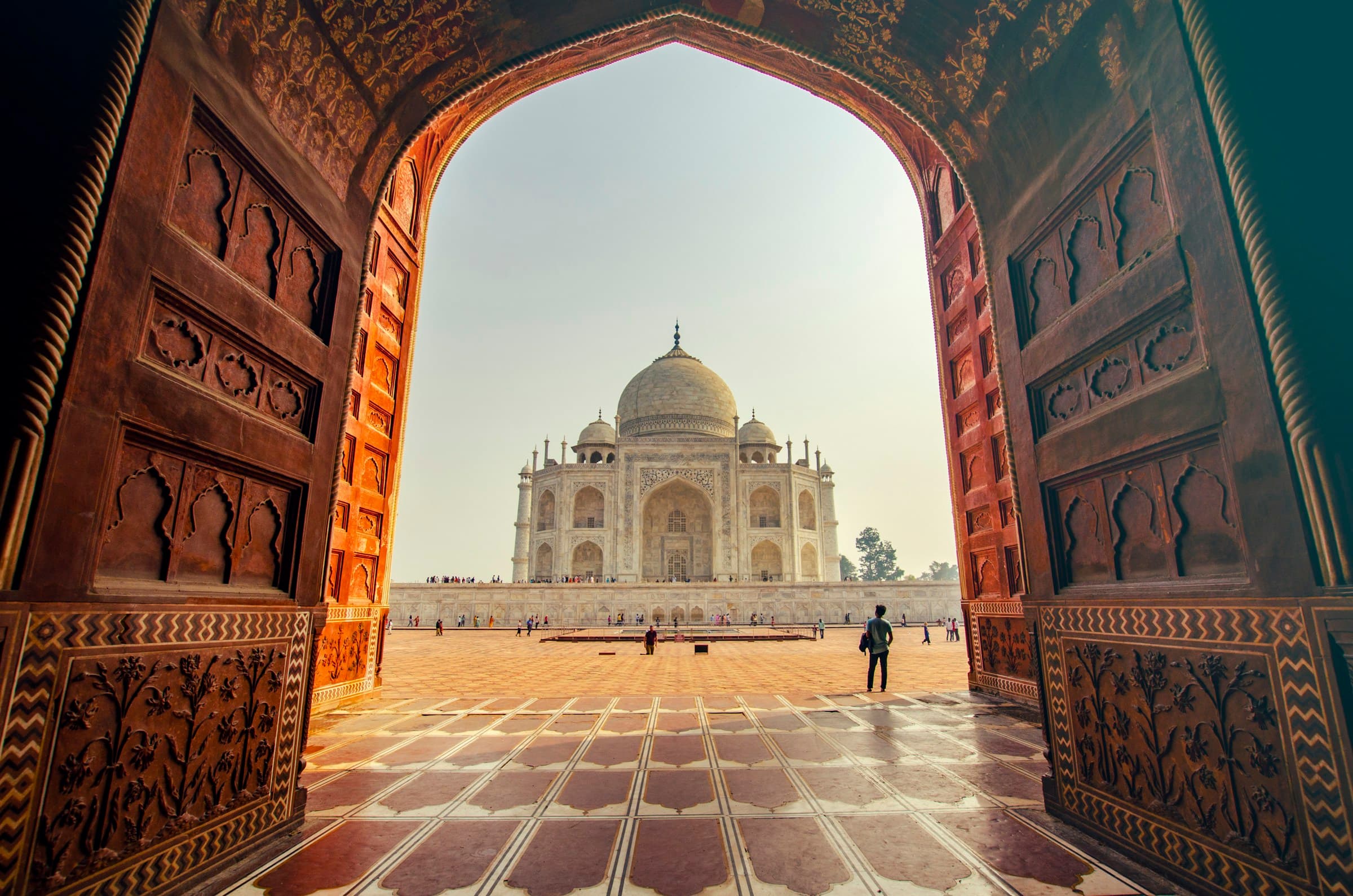
Jaipur does not ask whether you are comfortable with ornament.
The Pink City assumes you came to look: fort walls at dawn, block-print workshops in Sanganer, jewelry counters on MI Road that treat patience as qualification. If the Asian Grand Tour has a stop for splendor, it is here, and Rambagh Palace on Bhawani Singh Road remains the address that makes splendor habitable rather than theatrical.
The property began in 1835 as a garden retreat outside the walled city. It became a royal guesthouse, then the principal residence of Maharaja Sawai Man Singh II after expansion in the 1920s and 1930s. After independence, the maharaja converted Rambagh into what is widely cited as India's first luxury palace hotel, opening former royal chambers to guests in the 1950s. Taj Hotels assumed management on 2 May 1972, restoring the building while upgrading plumbing, air-conditioning, and service to contemporary five-star standard. This is a room study: three nights to learn palace scale, Mughal gardens, and the discipline beneath Jaipur maximalism.
"Maximalism only works when someone has already measured the proportions. Rambagh has had a century to practice."
Arrival on Bhawani Singh Road
Most international guests arrive from Jaipur International Airport, roughly thirty minutes to the palace in light traffic. The correct first impression is green: peacocks on lawn, hand-carved marble jali screens, sandstone balustrades that frame corridors rather than decorate them.
Check-in sets the register. Taj butlers on eligible categories handle unpacking and pressing without performance. Request a garden-facing or historical wing category when booking; renovation schedules and room nomenclature change, so confirm view language in writing on tajhotels.com.
Dress code in public rooms runs smart casual to formal depending on venue. Jaipur heat is real. Linen for day, closed shoes for dinner, and the assumption that palace hospitality still observes evening ceremony.
The Palace Room and Garden Rhythm
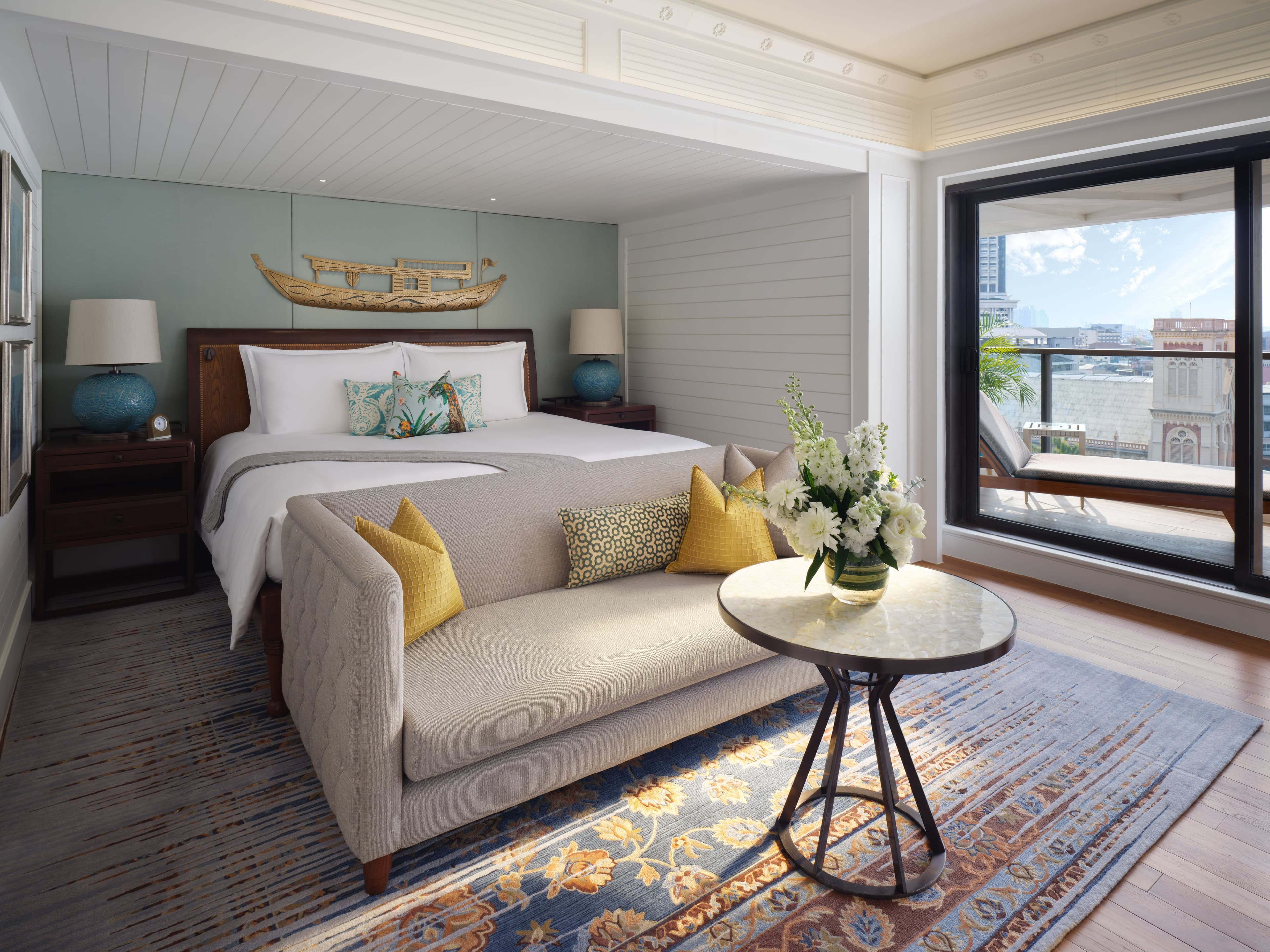
Guest rooms occupy former royal chambers and later wings. Ceilings are high. Scale is intentional. You are not in a business hotel that happens to have antiques. You are in a residence that learned to host strangers without surrendering proportion.
Three nights teach Jaipur's tempo: Amer Fort at opening hour before coaches crowd the courtyards; afternoon retreat to air-conditioning and J Wellness Circle spa; evening back to the lawns when heat loosens its grip. The palace compound is not a fortress against the city. It is a base camp for looking outward.
For diaspora travelers with complicated feelings about Rajput ornament, Rambagh offers a controlled introduction. Splendor is on display, but service discipline prevents camp. The hotel knows the difference between heritage and theme park.
Dining Inside the Compound
Rambagh contains multiple restaurants. You cannot eat at all of them in three nights. Choose contrast.
Suvarna Mahal handles formal Indian dining in a palace ballroom setting: the room for hosts who want ceremony without leaving the property. Rajput Room and Verandah offer lighter multi-cuisine meals when heat or travel fatigue argues against long formal service. Steam, the lounge bar set in a restored train carriage, supplies evening cocktails with novelty that still respects the building's history.
The Grand Tour notes 1135 AD near Amer Fort for Rajasthani thali with fort views, and Lassiwalla on MI Road for democratic street refreshment. Plan one dinner outside the palace for city texture. Return to Rambagh for breakfast on the lawn when peacocks treat the garden as theirs, which they do.
MI Road, Amer, and the Gem Palace
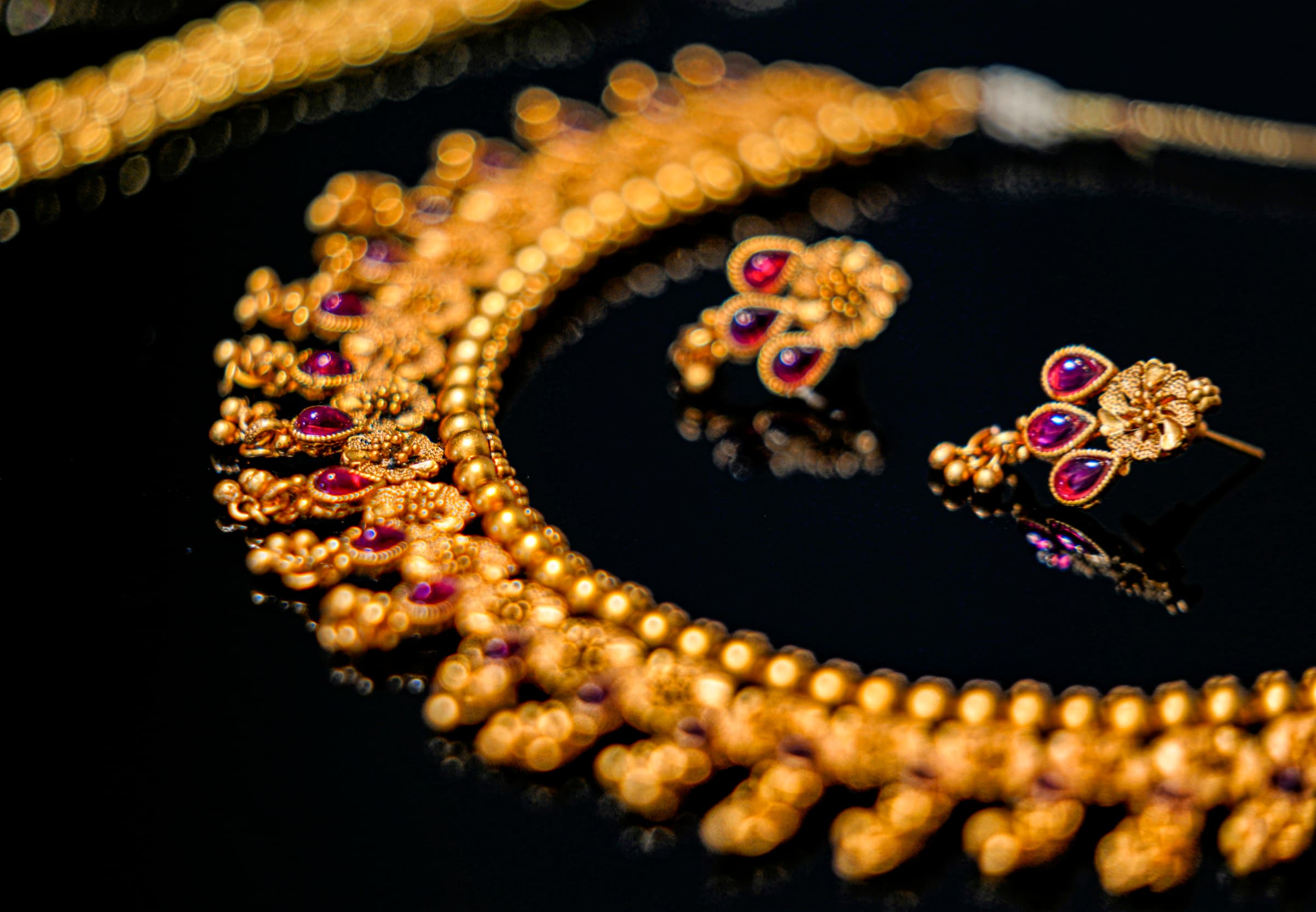
Three nights should not be palace-only. The Gem Palace on MI Road, run by the Kasliwal family since 1852, remains where serious buyers study Jaipur jewelry on its own terms. Read our craft essay before crossing town with a shopping list.
City Palace and Jantar Mantar reward a guided morning if you want astronomical and architectural context. Hawa Mahal is best read from the street at an hour when tour groups thin. Block-print workshops in Sanganer justify a half-day if textiles matter to your itinerary.
Pair palace mornings with city afternoons. The juxtaposition is the point: maximalism at Rambagh, commerce and craft in the bazaars, fort geometry at Amer at dawn.
A Three-Night Frame
Night one: Arrive, spa foot treatment, light dinner at Verandah, sleep with balcony doors sealed against heat and peacock calls.
Night two: Dawn taxi to Amer Fort. Return for pool or spa. Formal dinner at Suvarna Mahal or 1135 AD if you booked outside the compound.
Night three: Morning at Gem Palace or City Palace if arranged. Final garden walk. Depart for Mumbai or Delhi with ornament fatigue converted, ideally, into respect.
This frame assumes you are not commuting to Bollywood or wedding factories unless that is your purpose. It optimizes for craft, jewelry, and the city's dual register: Rajput scale and market patience.
How It Compares
Samode Haveli and boutique properties in the old city offer haveli intimacy at lower scale. Business hotels near the airport suit one-night layovers.
Rambagh occupies institutional memory: royal residence converted early to palace hospitality, Taj service depth accumulated since 1972, gardens that still feel inhabited rather than staged. It is not Jaipur's sharpest design hotel. It is the address that teaches how the city wants splendor to feel when someone else is hosting.
On the Asian Grand Tour, Jaipur precedes Mumbai's noise with color and pedigree. This hotel is where that lesson becomes lawn, marble, and peacock.
Practical Notes
Address: Rambagh Palace, Bhawani Singh Road, Jaipur, Rajasthan 302005, India.
Reservations: Book via tajhotels.com or call the hotel directly. Request garden or historical wing preference in writing.
Rates: Published room rates vary by season and category. Confirm total price including tax before committing.
Transport: Prepaid airport taxi or hotel car; confirm Amer Fort timing with concierge for dawn entry.
Sensitivity: The property is a working hotel in a living city, not a museum diorama. Treat staff and gardens accordingly.
The Verdict
Rambagh Palace is not a discovery. It is the palace hotel against which other Jaipur addresses are measured, fairly or not.
Three nights teach garden rhythm, butler logistics in heat, and the contrast between ballroom dinner and MI Road lassi. For travelers mid-route through the Grand Tour, Jaipur adds splendor on purpose before Mumbai's ambition.
Book garden-facing when possible. Walk Amer at opening. Study jewelry seriously once. Confirm room category and restaurant reservations directly before travel.
Read The Gem Palace and the Education of Stones, You Need a Week in Kyoto, and The Asian Grand Tour.