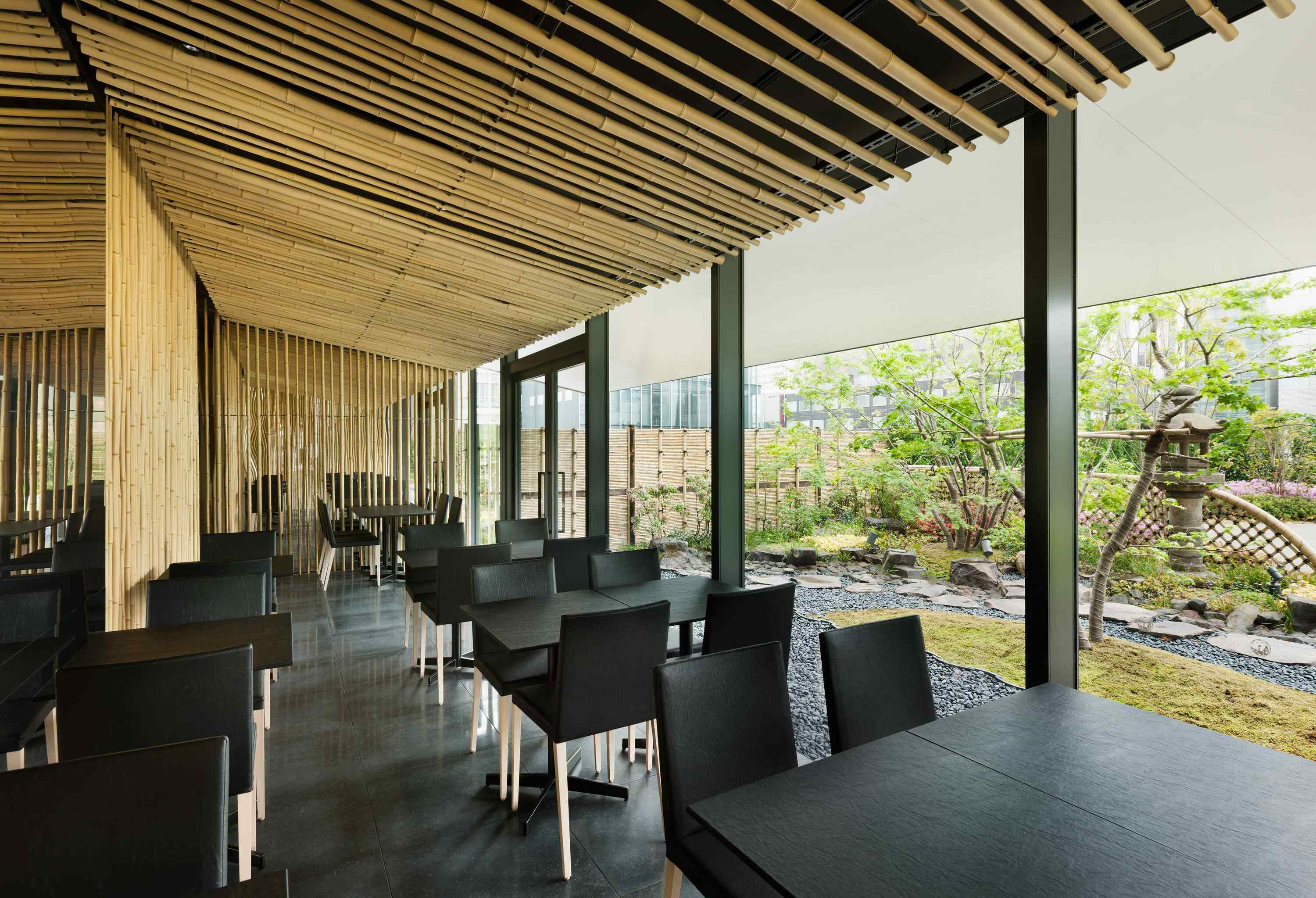
Jugetsudo Ginza Kabukiza by Kengo Kuma. Photograph courtesy Maruyama Nori.
You reach the room by elevator, not by garden path.
On the fifth floor of Kabukiza Tower at 4-12-15 Ginza, Chuo-ku, Jugetsudo faces the theatre’s public rooftop garden through glass. Inside, roughly three thousand bamboo stalks, twenty to forty millimetres in diameter, partition retail, counter, and terrace seating into a grove. The ceiling folds so the bamboo meets the outer eaves and continues the garden’s line. Architect Kengo Kuma, who collaborated on the fifth-generation Kabukiza complex with Mitsubishi Jisho Design, designed this café when the rebuilt theatre opened in 2013. The argument is spatial before it is ceremonial: tea culture as continuous interior, available without a performance ticket.
“It’s not bamboo as a material that I am on about, it is the state of the bamboo grove. More than the feel of the bamboo, it’s the light and the sound and the touch of the grove.”
Kengo Kuma, quoted by Roger Pulvers in Japan Forum, 2014
A Brand That Looks at the Moon
Maruyama Nori began as a Nihonbashi seaweed merchant in 1854. The tea brand Jugetsudo followed in 1980, built to carry the same quality obsession into green tea. The name means “the place from where one looks at the moon”: seasonal attention rendered as address. Paris came first for Kuma’s bamboo work, on Rue de Seine in 2008. Ginza followed when Kabukiza V reopened and the company wanted a room where theatre crowds, diaspora visitors, and Ginza walkers could sit without treating tea as museum display.
The fifth-floor complex around the café is deliberately public. The rooftop garden, about 450 square metres, holds memorial stones, roof tiles from the fourth Kabukiza, and a stone lantern associated with playwright Kawatake Mokuami. Landscape notes for the rebuild speak of teiouku ichinyo, garden and house as one. Jugetsudo is the indoor half of that sentence. You can enter the garden free of charge from the tower; the café is the place where the same hospitality becomes a cup, a sweet, and a seat facing green.
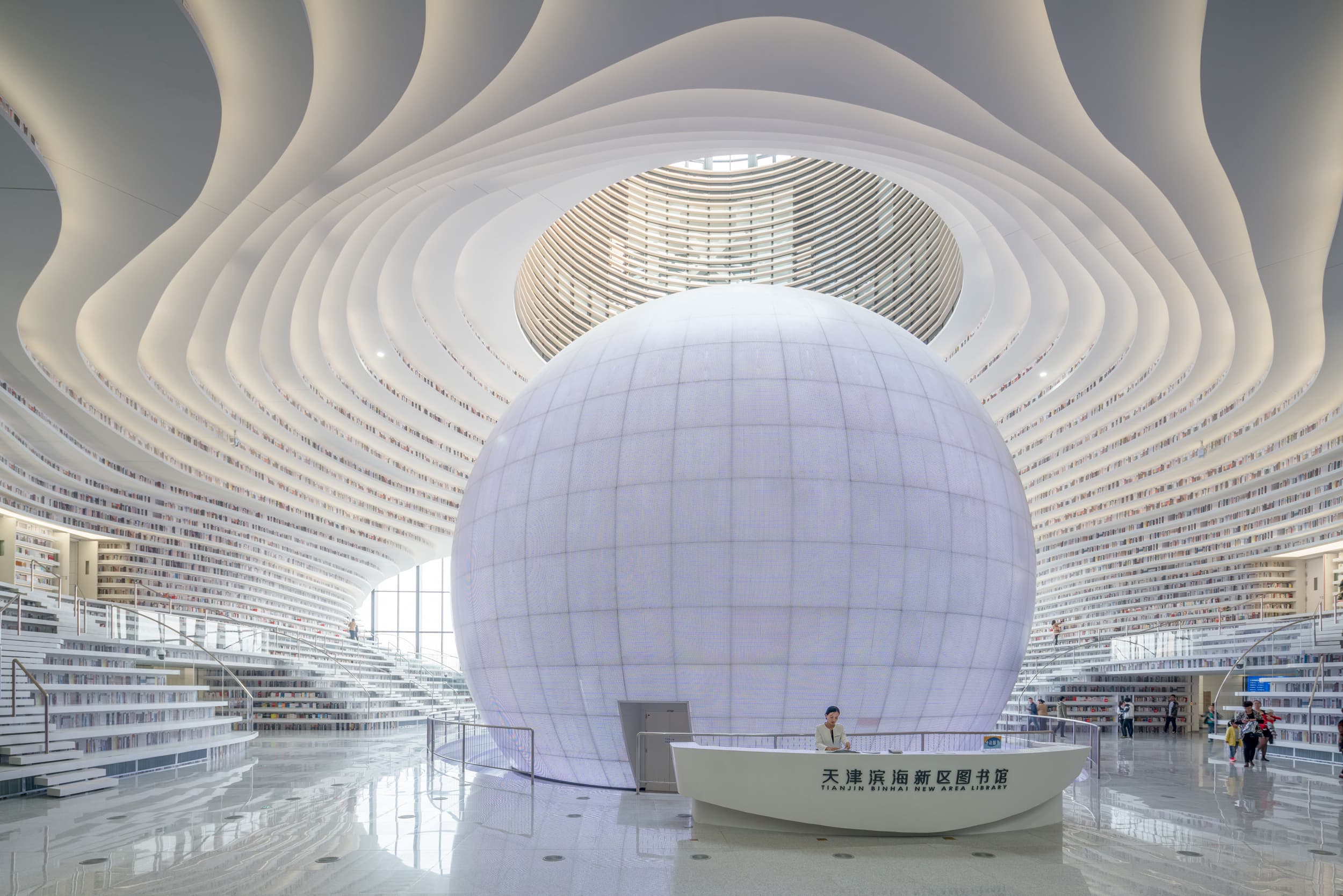
This is The Great Asian Room logic in commercial form: after Tianjin’s civic atrium, a Ginza tea room that earns authority by how it filters light and frames a garden.
Soft Partition, Bent Ceiling
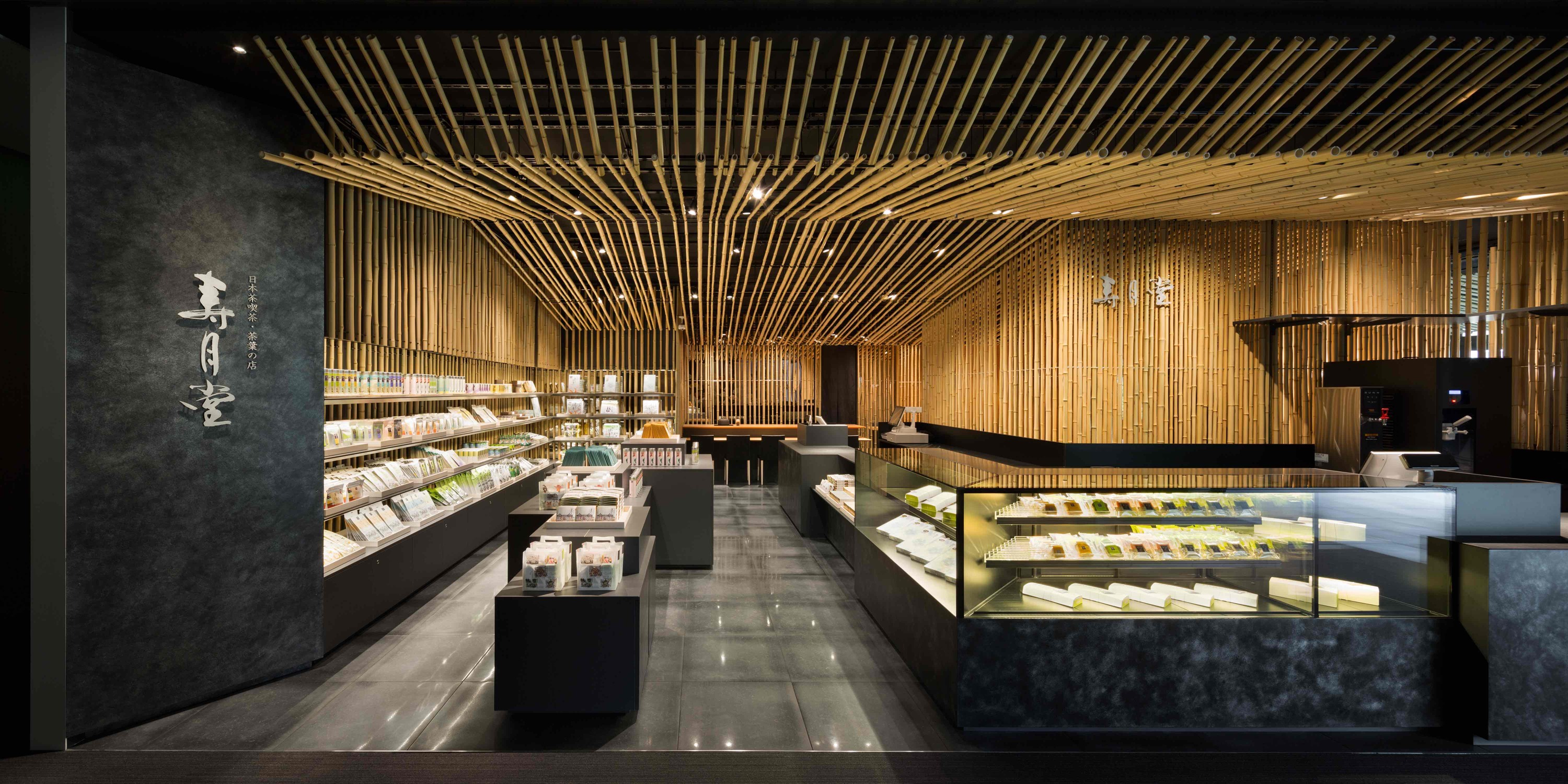
Kuma’s project text is unusually precise. Bamboo pieces at varying pitches “softly partition” the room. The ceiling is “bent” so stalks thrust under the eaves into the garden, “resembling Origami.” Overlapping densities create a grove that “softly connects Kabukiza and the garden.” The hardware is almost blunt: bolts and nuts skewering unitized bamboo. Luxury here is repetition and gap, not gilding.
From outside, the glass front reads as a quiet pavilion under a deep grey eave. From inside, the grove thickens and thins so retail, counter service, and terrace tables feel adjacent rather than zoned. The café occupies roughly 120 to 127 square metres: small enough that the bamboo does most of the atmosphere work. Staff pour sencha and matcha; the menu extends to matcha sweets and light nori-led savoury plates, a reminder that Maruyama’s first craft was seaweed. The walk-in café needs no ticket. Year-end closures are the main interruption on an otherwise daily calendar.
How to Sit Here
Arrive from Higashi-ginza Station Exit 3, one minute on foot. Use the Kabukiza Tower lifts on the Showa-dori side to the fifth floor; the garden and café are not reached through the main theatre entrance. Walk the garden first if you can. The vermilion Goemon staircase drops toward the fourth-floor corridor of theatre models, and the roof tiles carry the Kabukiza phoenix crest: one bird faces the other way, a small hunt regulars enjoy. Then take a terrace or window table so the grove and the lawn share one field of view.
Order tea before you over-order sweets. The room rewards pacing closer to a short rest between Ginza errands than to a formal chaji. Matcha pudding and seasonal parfaits photograph well; the clearer test is whether the pour still holds your attention after the dessert is gone. If you want instruction, reserve a class through Jugetsudo’s booking portal (beginner ceremony and brewing sessions are listed in Japanese and English). If you want atmosphere, a single carefully poured cup facing the garden is enough. The shop sells leaves, nori, and Kabukiza-linked souvenirs for the suitcase. Confirm hours and last-order times before you go; published listings commonly place the shop and café around 10:00 to 18:00 on weekdays, with weekend hours running later.
Pair the stop with The Banquet Guide to Tokyo for the wider city map. For a stricter seasonal grammar at table, Kyoto’s Lunch at Kikunoi Honten remains the Banquet counterweight.
Jugetsudo’s authority is portable. Diaspora travelers who grew up with tea as background noise often find the room clarifying: bamboo as climate, garden as borrowed landscape, Kabukiza as the civic neighbour. You leave with leaves, nori, or nothing but the memory of filtered light. The grove has already done its work.
Continue the series with Water Mirror and the Contemplative Space in Kanazawa.